
This Week in Music: Legacies Cashed, Futures Contested
A black Fender Stratocaster sold for $14.5 million this week. Let that number sit for a moment. David Gilmour's legendary Black Strat — the guitar that shaped the sound of 'Comfortably Numb,' 'Money,' and decades of Pink Floyd's catalog — more than doubled the previous auction record for any guitar ever sold. It's the kind of price tag that feels less like commerce and more like canonization, a culture deciding in real time what it considers sacred.
That impulse to preserve and monetize legacy ran through almost every major story this week. Quincy Jones' estate sold his catalog, publishing assets, and Fresh Prince of Bel-Air rights to HarbourView in a sweeping deal that puts one of American music's most important bodies of work under new corporate stewardship. Dr. Dre, meanwhile, officially crossed into billionaire territory according to Forbes — a milestone built less on beats than on headphones, real estate, and brand equity. These stories aren't really about music anymore. They're about what music becomes once it's big enough to be an asset class.
But legacy isn't just about money. It's about meaning, and this week tested that line hard. Travis Scott, Killer Mike, and a coalition of artists filed an amicus brief asking the Supreme Court to hear a death penalty case in which 40 pages of rap lyrics were entered as evidence during sentencing. It's an old fight — whether creative expression can be weaponized as confession — but the stakes here are as high as they get. The case forces a question the legal system has never cleanly answered: does art deserve the same protection when it's made by Black artists rapping about violence as when it's made by anyone else?
The tension between art's cultural weight and its commercial machinery showed up everywhere you looked. Spotify announced it crossed $11 billion in royalty payouts last year, with over 1,500 artists clearing a million dollars. Those are staggering numbers. They're also the shiniest possible framing of a system where the vast majority of artists still earn pennies per stream. And then there's Suno, the AI music platform, which now boasts 2 million paying subscribers and $300 million in annual revenue. Over 100 million people have used it since launch. Whatever you think about AI-generated music, those aren't experimental numbers anymore. That's an industry.
TikTok added fuel to the disruption fire by rolling out full-song streaming via Apple Music integration. You no longer have to leave the app to hear a complete track. It's a subtle shift with massive implications — the 15-second clip that defined a generation of music discovery might be giving way to something that looks a lot more like a streaming platform with a social feed bolted on.
“Jack Harlow dropped 'Monica' on his 28th birthday, recorded at Electric Lady Studios after relocating to New York.”
Amid all this structural upheaval, actual music still got made. Bruno Mars hit No. 1 on the Billboard 200 with 'The Romantic,' his first chart-topper in over a decade, proving that pop craftsmanship still has commercial gravity. Jack Harlow dropped 'Monica' on his 28th birthday, recorded at Electric Lady Studios after relocating to New York. Kacey Musgraves announced her sixth album 'Middle of Nowhere' with a feature list — Willie Nelson, Billy Strings, Miranda Lambert — that reads like a Nashville summit meeting. Thundercat and WILLOW linked up on 'ThunderWave,' and Violet Grohl stepped out from her father's shadow with the announcement of her debut LP on Republic Records. Finneas, not content with his Grammy shelf, spent an entire year scoring all eight episodes of 'Beef' Season 2.
The nostalgia machine, as always, was running at full capacity. The Pussycat Dolls reunited as a trio for a 53-date world tour marking 20 years of 'PCD.' Miley Cyrus is bringing Hannah Montana back for a Disney+ special. Universal is reportedly developing a Bon Jovi biopic. Alice Cooper announced his most revealing memoir yet. Jill Scott plotted a 36-date world tour stretching into 2026. The appetite for familiar names in new packaging shows no sign of slowing.
Not every callback was warm. Chappell Roan was mobbed by autograph scalpers in Paris, prompting Noah Kahan to publicly blast the resale culture that turns artists into walking merchandise opportunities. Boy George, characteristically, had his own take. It was a small moment that spoke to something larger — the widening gap between how fans experience artists and how artists experience fans.
What this week made clear is that music in 2025 exists in a state of permanent negotiation — between legacy and innovation, between protection and exploitation, between the thing itself and what it's worth on a balance sheet. The Black Strat sold for $14.5 million. Suno has 2 million paying users making songs with a prompt. Somewhere between those two facts is where the future of this industry lives, whether it's ready or not.
More in Industry

Labrinth Goes Off on Euphoria and Columbia: 'I'm Done'
The Euphoria composer torched his ties to the HBO series and Columbia Records in a fiery social media post. Something clearly broke behind the scenes.
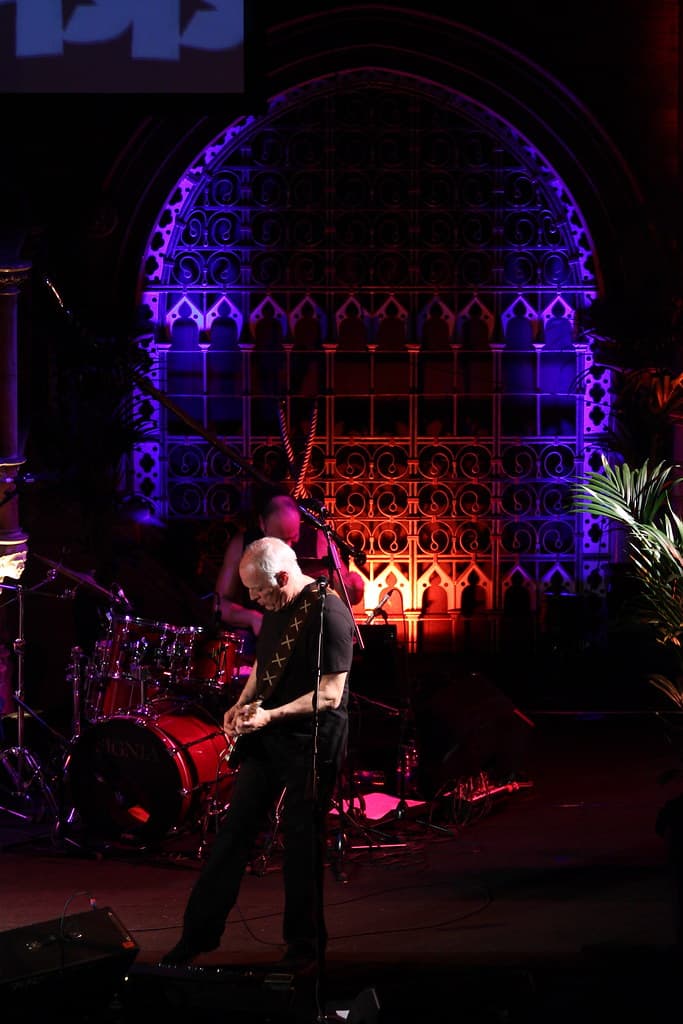
David Gilmour's Black Strat Sells for $14.5M, Shattering Records
The Pink Floyd guitarist's legendary Black Strat more than doubled the previous record for most expensive guitar ever sold at auction.
